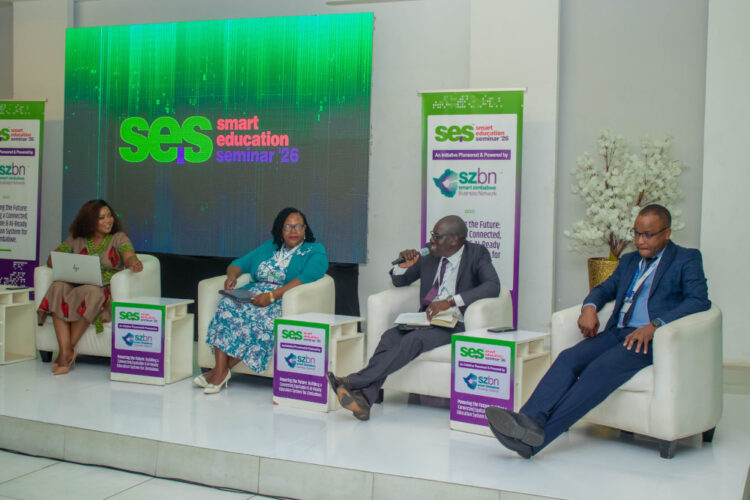
The Smart Zimbabwe Business Network successfully hosted the Smart Education Seminar 2026 on 5 March 2026 in Harare, bringing together key stakeholders from Government, academia, the private sector, and the development community to chart a path toward a smart, inclusive, and future-ready education system.
Held under the theme:
the seminar provided a dynamic platform for dialogue, collaboration, and practical solutions to address the evolving needs of Zimbabwe’s education sector.
The seminar was honoured by the participation of senior Government leadership, reflecting strong national commitment to transforming education through technology and innovation.
The Ministry of ICT, Postal and Courier Services was represented by the Deputy Minister, Hon. Dingimuzi Phuti, who delivered a keynote address titled:
His address underscored the critical importance of connectivity as the foundation of modern education and highlighted Government’s progress through initiatives such as the Presidential Internet Scheme, including the distribution of Starlink kits to schools across the country. The keynote reinforced the national vision of ensuring that no learner is left behind, regardless of geographic location.
The Ministry of Higher and Tertiary Education, Innovation, Science and Technology Development was represented by Mr. Wisdom Mtisi on behalf of the Permanent Secretary, who delivered a compelling keynote titled:
The address emphasized the urgent need to equip educators with digital competencies and AI literacy, highlighting teacher training and continuous professional development as critical pillars for building a future-ready education workforce.
Throughout the seminar, several critical themes emerged:
Reliable internet access is no longer optional — it is essential for enabling access to global knowledge, digital learning platforms, and modern teaching tools.
The importance of electricity, particularly sustainable solutions such as solar energy, was highlighted as a prerequisite for digital transformation in schools.
AI is rapidly transforming education globally, and Zimbabwe must act decisively to integrate AI into learning systems to remain competitive and relevant.
Teachers are central to the success of smart education. There is a critical need for continuous training in digital tools, AI, and innovative teaching methods.
The transformation of education requires a coordinated effort between Government, private sector, development partners, and the diaspora.
The seminar featured insightful contributions from industry experts and thought leaders:
The Smart Education Seminar 2026 achieved several important outcomes:
The success of the Smart Education Seminar 2026 marks an important milestone in Zimbabwe’s journey toward a smart education ecosystem. It reaffirmed the importance of collaboration, innovation, and decisive action in addressing the challenges facing the education sector.
As the Smart Zimbabwe Business & Innovation Network continues to drive this agenda, stakeholders are encouraged to actively participate in initiatives such as EduConnect 2030, ensuring that Zimbabwe’s learners are equipped to thrive in a rapidly evolving digital world.
The future of education in Zimbabwe is not a distant vision — it is being built today through partnerships, innovation, and shared commitment.
Together, we can power the future of education and build a smarter Zimbabwe.